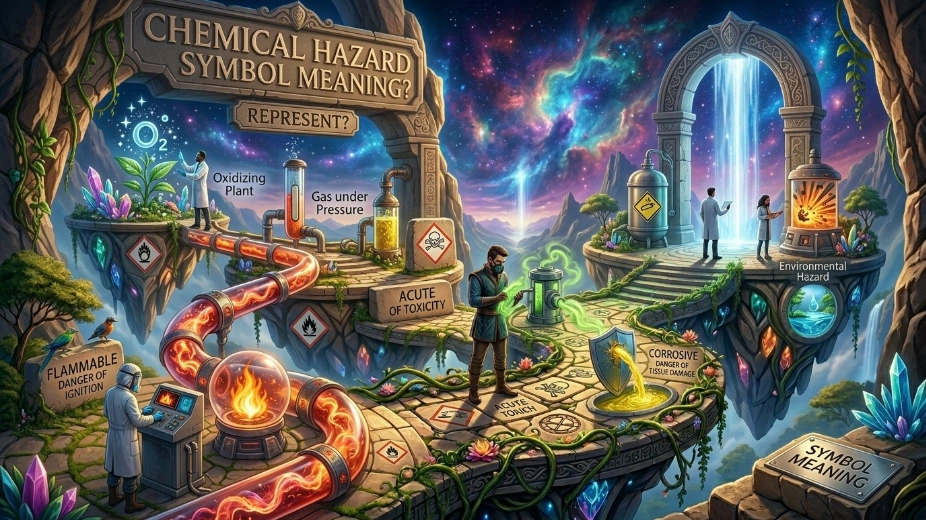
Have you ever noticed a warning symbol on a cleaning product, laboratory container, or industrial chemical and wondered what it actually means? Those small symbols may seem simple, but they play a crucial role in protecting people from serious injuries, health risks, and environmental damage.
Chemical hazard symbols are universal warning signs designed to communicate danger instantly. Whether you’re working in a laboratory, handling household chemicals, or working in manufacturing, understanding these symbols can help prevent accidents and even save lives.
In today’s world, where chemicals are part of everyday life, knowing the meaning behind these warning labels is more important than ever.
What Does Chemical Hazard Symbol Mean?
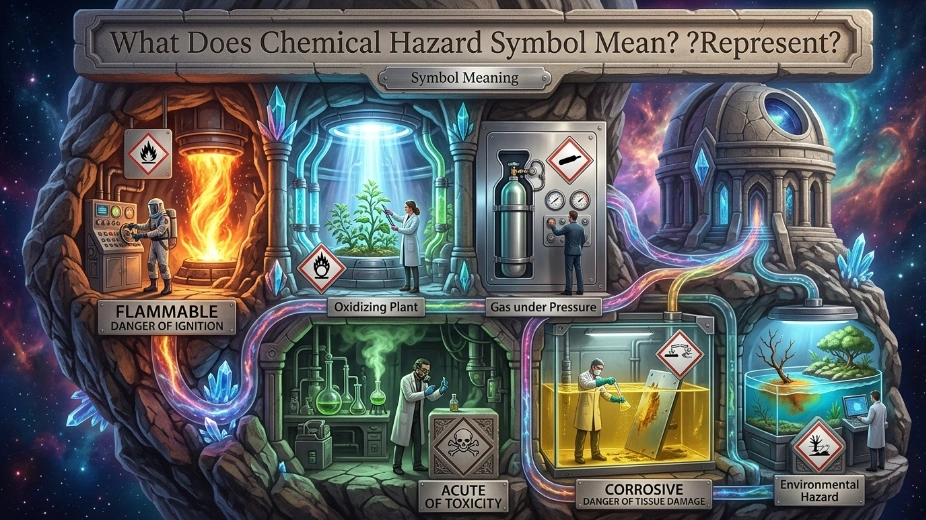
A chemical hazard symbol is a standardized warning icon used to identify specific dangers associated with a chemical substance. These symbols quickly communicate potential risks such as toxicity, flammability, corrosiveness, environmental harm, or health hazards.
The primary purpose of chemical hazard symbols is to ensure people can recognize dangers immediately, regardless of language or location.
Common chemical hazard symbols include:
- Flammable substances
- Toxic chemicals
- Corrosive materials
- Explosive substances
- Oxidizing agents
- Health hazards
- Environmental hazards
- Compressed gases
These symbols are widely used under the Globally Harmonized System (GHS), which helps create consistent chemical safety standards worldwide.
Deep Spiritual / Emotional Meaning

Although chemical hazard symbols were created for safety purposes rather than spirituality, they can carry symbolic lessons on a deeper level.
They remind us that not everything dangerous appears threatening at first glance. Just as certain chemicals look harmless but can cause significant harm, situations, relationships, or emotions in life may carry hidden risks.
The chemical hazard symbol can symbolize:
- Awareness before action
- Respect for unseen consequences
- Responsibility for choices
- The importance of caution and wisdom
- Personal boundaries and self-protection
On a symbolic level, these warning signs encourage mindfulness and thoughtful decision-making.
Meaning in Love
In relationships, the concept behind chemical hazard symbols can offer valuable insights.

Sometimes a “hazard warning” appears emotionally before a relationship becomes unhealthy. Red flags such as manipulation, dishonesty, lack of respect, or poor communication often serve as emotional hazard symbols.
In love, this symbol may represent:
- Paying attention to warning signs
- Protecting emotional well-being
- Healthy boundaries
- Emotional intelligence
- Avoiding toxic relationships
Rather than creating fear, the message is about recognizing risks early and making informed decisions.
Symbolism Across Cultures
Western Safety Culture
In many Western countries, chemical hazard symbols represent responsibility, workplace safety, and scientific awareness. They are seen as essential tools for protecting workers and communities.
Japanese Culture
Japan places strong emphasis on precision, preparation, and risk prevention. Hazard symbols align closely with cultural values surrounding caution, discipline, and public safety.
Traditional Eastern Philosophy
From a broader Eastern perspective, warning symbols can symbolize balance. They remind individuals that every powerful force contains both benefits and risks, requiring wisdom and moderation.
Across cultures, the common theme remains the same: awareness prevents harm.
Emotional & Psychological Meaning
Psychologically, hazard symbols trigger an immediate attention response.
The human brain is naturally wired to notice warning signs. When we see a hazard symbol, our mind becomes more alert and cautious.
Emotionally, these symbols may represent:
- Self-preservation
- Vigilance
- Personal responsibility
- Awareness of consequences
- Risk assessment
Interestingly, they also remind us that fear itself is not always negative. Sometimes fear serves as a protective mechanism that helps us make smarter choices.
What It Means If You Keep Seeing It
If you repeatedly notice chemical hazard symbols, it may simply be because you’re encountering products, workplaces, or environments where safety information is important.
However, from a symbolic perspective, repeatedly seeing warning signs may encourage you to ask:
- Am I overlooking an important risk?
- Is there a situation requiring greater caution?
- Have I ignored warning signs in my personal life?
- Do I need stronger boundaries?
- Am I making decisions too quickly?
The repeated appearance of warning imagery often serves as a reminder to slow down and evaluate circumstances carefully.
Dream Meaning
Dreams involving chemical hazard symbols can have several interpretations depending on the context.
Dreaming of a Toxic Chemical Symbol
This may suggest exposure to negative influences, unhealthy environments, or emotional stress.
Dreaming of a Corrosive Warning Sign
Often symbolizes relationships, habits, or situations that are gradually damaging your emotional well-being.
Dreaming of an Explosive Hazard Symbol
May indicate suppressed emotions, anger, or tension that could soon surface.
Dreaming of Multiple Hazard Symbols
Can reflect feelings of overwhelm, uncertainty, or concern about future decisions.
Dreaming of Ignoring a Hazard Warning
Often symbolizes neglecting important warning signs in waking life.
Dream meanings are highly personal, so considering your current circumstances can provide deeper insight.
Personal Insight Section
One of the most fascinating aspects of chemical hazard symbols is how easily people become familiar with them without truly understanding them.
Many individuals see these symbols daily on household cleaners, paints, batteries, or industrial products. Yet few stop to learn what each symbol actually means.
I’ve spoken with workers who admitted they ignored warning labels for years simply because they had become part of the background. Only after a close call did they realize how important those symbols truly were.
This highlights an important life lesson: familiarity does not eliminate risk. Sometimes the things we see every day deserve our attention the most.
What To Do / Practical Steps
If you encounter chemical hazard symbols regularly, follow these practical safety steps:
- Learn the meaning of each common hazard symbol.
- Read product labels before use.
- Follow handling and storage instructions carefully.
- Wear appropriate protective equipment when necessary.
- Keep hazardous substances away from children and pets.
- Never mix chemicals unless instructions specifically allow it.
- Dispose of chemicals according to local safety regulations.
- Stay informed about workplace safety procedures.
Knowledge is one of the most effective forms of protection.
Real-Life Example
A maintenance worker once used two common cleaning products together, assuming they were safe because both were sold in regular stores.
What he didn’t realize was that the products carried chemical hazard warnings indicating they should never be mixed. The combination produced toxic fumes that quickly caused breathing difficulties and required emergency medical attention.
The incident could have been avoided by understanding the warning symbols and reading the safety information beforehand.
This example demonstrates why chemical hazard symbols exist—not to create fear, but to prevent avoidable accidents.
Why Chemical Hazard Symbols Are Important in Everyday Life
Many people assume chemical hazard symbols are only relevant in laboratories or industrial facilities. In reality, these symbols are part of everyday life. They appear on household cleaners, paint products, pesticides, automotive fluids, batteries, and even some personal care products.
Their importance lies in their ability to communicate danger instantly. A quick glance at a symbol can alert someone to wear gloves, avoid inhaling fumes, keep the product away from flames, or store it safely. Without these visual warnings, accidents would happen far more frequently.
Understanding chemical hazard symbols is not just about workplace safety—it’s about protecting yourself, your family, and your environment every day.
The History Behind Chemical Hazard Symbols
Chemical hazard symbols did not appear overnight. They evolved as industries grew and governments recognized the need for universal safety communication.
Before standardized symbols existed, warning information was often written in text only. This created problems because people spoke different languages and literacy levels varied widely.
Over time, international organizations developed visual systems that could be understood almost instantly. Today, modern hazard symbols are recognized across much of the world, making chemical safety more effective and accessible than ever before.
Common Mistakes People Make When Reading Hazard Labels
One of the biggest misconceptions is believing that hazard symbols are merely suggestions rather than serious warnings.
Many people skip reading instructions because they assume they already know how to use a product. Others underestimate the risks associated with common household chemicals.
Another common mistake is focusing only on the product’s intended use while ignoring storage, disposal, and emergency information. Hazard labels are designed to provide a complete picture of safety, not just usage directions.
Taking a few extra seconds to understand a warning label can prevent injuries and costly mistakes.
How Chemical Hazard Symbols Protect the Environment
Chemical hazards are not limited to human health. Certain substances can cause significant environmental damage if released into nature.
Some chemicals contaminate rivers and lakes, harming fish and aquatic ecosystems. Others may affect soil quality or threaten wildlife populations.
Environmental hazard symbols serve as reminders that responsible handling extends beyond personal safety. They encourage proper disposal methods and help reduce pollution that can affect entire communities.
Every individual action contributes to environmental protection.
The Role of Chemical Hazard Symbols in Workplace Safety
Workplaces that handle chemicals depend heavily on hazard symbols to maintain safe operations.
Employees often work around substances that can cause burns, respiratory problems, fires, or long-term health effects. Hazard symbols provide quick visual reminders of the precautions needed before handling these materials.
When workers understand these symbols, they can make safer decisions, respond appropriately during emergencies, and reduce the likelihood of workplace accidents.
Safety awareness creates a culture where everyone benefits.
How Children Can Learn Chemical Safety Awareness
Teaching children about chemical safety can be surprisingly valuable.
Young children are naturally curious and may be attracted to colorful bottles or containers. Helping them recognize that certain symbols mean “do not touch” can reduce the risk of accidental exposure.
Simple explanations using age-appropriate language can help children understand that some products require adult supervision.
Early safety education often leads to lifelong awareness and responsible habits.
Chemical Hazard Symbols and Risk Management
Risk management is all about identifying potential dangers before problems occur. Chemical hazard symbols support this process by providing immediate risk information.
Whether someone is transporting chemicals, storing products, or using them for a specific task, the symbols help guide decision-making.
Instead of reacting after an accident happens, people can take preventive measures beforehand. This proactive approach saves time, money, and most importantly, lives.
How Technology Is Improving Chemical Safety Communication
Modern technology is making chemical safety information easier to access than ever before.
Many manufacturers now include QR codes alongside hazard labels. By scanning a code, users can instantly access detailed safety instructions, emergency procedures, and handling recommendations.
Digital databases and mobile applications are also helping workers quickly identify chemical risks in real time.
As technology continues to advance, safety communication will likely become even more effective and user-friendly.
The Hidden Costs of Ignoring Chemical Warnings
Ignoring a chemical warning may seem harmless in the moment, but the consequences can be significant.
Medical expenses, workplace downtime, property damage, environmental cleanup costs, and legal liabilities can all result from preventable accidents.
Beyond financial costs, there is also the emotional impact on individuals and families affected by injuries or health complications.
Hazard symbols exist because prevention is always easier than recovery.
Lessons Chemical Hazard Symbols Teach About Life
Interestingly, chemical hazard symbols offer lessons that extend beyond chemistry.
They remind us that appearances can be misleading. Something that looks harmless may contain hidden risks, while something intimidating may be manageable with the right knowledge and preparation.
These symbols encourage awareness, responsibility, and informed decision-making. In many ways, they reflect a simple but powerful truth: understanding risk is one of the foundations of wisdom.
Future Trends in Chemical Hazard Labeling
As industries evolve, chemical hazard communication continues to improve.
Future labels may include smart packaging, augmented reality features, and interactive digital warnings that provide customized safety information.
Researchers are also exploring ways to make hazard symbols even easier to understand across different cultures and age groups.
The goal remains the same: helping people recognize dangers quickly and make safer choices in every environment.
FAQs
What is the purpose of a chemical hazard symbol?
A chemical hazard symbol provides a quick visual warning about the dangers associated with a chemical substance.
Are chemical hazard symbols the same worldwide?
Most countries now use the Globally Harmonized System (GHS), which standardizes many chemical warning symbols internationally.
What does the skull and crossbones hazard symbol mean?
It indicates acute toxicity and warns that the substance can be highly poisonous.
Why are chemical hazard symbols important?
They help prevent accidents, injuries, health problems, and environmental damage by communicating risks clearly.
Can household products contain chemical hazard symbols?
Yes. Many cleaning products, paints, pesticides, and automotive chemicals display hazard symbols to inform users of potential dangers.
Final Thoughts
Chemical hazard symbols may seem like simple images, but they carry life-saving information. They remind us that awareness, preparation, and responsibility are essential whenever we interact with potentially dangerous substances. Beyond their practical purpose, these symbols also offer a broader lesson about paying attention to warning signs in every area of life. The ability to recognize risks before they become problems is a skill that protects not only our physical safety but also our emotional and personal well-being.
Call To Action
The next time you notice a chemical hazard symbol on a product, pause for a moment and ask yourself: Do I truly understand what this warning is trying to tell me? Learning the answer today could help prevent a serious mistake tomorrow.
Discover More Post
Japanese Dragon Symbol Meaning Wisdom Strength …
Car Symbol Lights Meaning A Complete Guide to … – Symbl Pro
Viking Bear Symbol Meaning Strength Spirit and the Warrior …

Jac is a dedicated and creative content writer with over 5 years of experience in the digital content industry. As an important contributor to Symblpro, he focuses on producing high-quality, SEO-optimized content that engages and informs readers. His expertise includes internet trends, modern slang, and user-friendly writing that simplifies complex topics. Jac is known for his clear, concise, and impactful storytelling style. Through Symblpro, he consistently delivers valuable and engaging content to a growing audience. His commitment to quality has helped build trust and credibility across the platform.